
Cairo & Giza
Egypt's sprawling capital and the last standing wonder of the ancient world — the Great Pyramids, the Sphinx, Islamic Cairo and the Egyptian Museum.
Updated September 2026
About Cairo & Giza
Cairo is not a resort — it's a working capital of over 20 million people, and it feels like it the moment you land: horns, minaret speakers, tea stalls, and the Nile cutting straight through the middle of all of it. Most visitors come for a focused few days rather than a full beach-style holiday, using it as the gateway to the Pyramids of Giza before flying on to Luxor, Aswan or the coast.
What makes Cairo worth those few days on its own is the sheer density of history in walking distance of each other — Pharaonic treasures in the Egyptian Museum, over a thousand years of Islamic architecture in the old city, and Coptic churches older than most European cathedrals, all a taxi ride apart. It rewards travellers who don't mind a bit of chaos in exchange for seeing genuinely irreplaceable things.
Giza is technically its own city, directly across the Nile from central Cairo and now fully absorbed into the wider metropolis — but the plateau on its western edge is where the reason you're reading this guide actually stands. The Great Pyramid of Khufu, its two companions, and the Great Sphinx sit together at the point where the city's sprawl runs straight into open desert, a boundary you can see with your own eyes standing on the sand.
Most visitors treat Giza as a half-day trip out of Cairo, and that covers the essentials. But staying an extra night here, or coming back for sunrise or sunset once the tour buses thin out, changes the experience completely — the plateau at those hours, with the light raking low across the stone, is a different place entirely from the midday crowds.
💡 Did You Know?
The Great Pyramid of Giza was the tallest man-made structure on Earth for almost 3,800 years — a record it held until Lincoln Cathedral in England surpassed it around 1311 AD.
Cairo & Giza
Cairo sits on the Nile in northern Egypt, about 220 km south of Alexandria and the Mediterranean coast. Coordinates: 30.0444° N, 31.2357° E.
Distances from other Egyptian cities: Alexandria — 220 km (about 2.5-3 hours by road or 30 minutes by air). Hurghada — 460 km (about 1 hour by air or 6 hours by road). Luxor — 670 km (about 1 hour by air or 9-10 hours by road/train). Sharm El Sheikh — 490 km (about 1 hour by air or 7-8 hours by road).
Cairo International Airport (CAI) is Egypt's main hub, about 20-25 km northeast of downtown, with direct flights from most major world cities.
How to Get There
By air (most visitors)
Cairo International Airport (CAI) is Egypt's busiest hub, with direct flights from Europe, the Gulf, Asia and North America. Domestic flights connect Cairo to every major Egyptian destination, usually in under 90 minutes.
Airport transfer & taxis
Downtown is about 45-75 minutes from the airport depending on traffic. Use a pre-booked transfer, a ride-hailing app (Uber/Careem both operate widely), or a metered white taxi rather than agreeing a fare with a driver who approaches you first.
By train from other cities
Overnight sleeper trains connect Cairo to Luxor and Aswan (about 10-12 hours), and fast daytime trains run to Alexandria (about 2.5 hours). Ramses Station in downtown Cairo is the main terminal.
Where to Stay
🏝️ Zamalek
Best for a leafy, walkable base. A Nile island neighborhood of tree-lined streets, cafés, art galleries and embassies — the calmest place to stay while still being central.
🏛️ Downtown Cairo
Best for belle-époque architecture and budget hotels. Grand early-1900s buildings, Tahrir Square, the Egyptian Museum, and a dense grid of cafés and street food within walking distance.
🕌 Islamic Cairo (Khan el-Khalili)
Best for mosques, madrasas and the historic bazaar. A dense old city of minarets and covered markets going back over a thousand years — come for a few hours, not to stay overnight.
🌳 Garden City & Nile Corniche
Best for riverside walks and upscale hotels. Quiet, winding colonial-era streets right next to the Nile promenade, close to embassies and 5-star hotels.
🏔️ The Plateau (Nazlet El-Semman)
Best for waking up with a pyramid view. The village right at the foot of the plateau, packed with hotels, rooftop cafés and shops that look directly onto the monuments.
🐫 Haram Street
Best for budget stays and easy transport links. The main road connecting Giza to central Cairo, lined with hotels of every price range and the closest Metro access.
🌳 Al-Talbiya
Best for a residential, local feel close to the plateau. A quieter neighborhood behind the pyramids, popular for mid-range hotels away from the main tourist strip.
Why Choose
🏔️ The last standing Ancient Wonder
The Pyramids of Giza are the only one of the Seven Wonders of the Ancient World still standing — and they're a 30-minute drive from downtown, not a remote expedition.
🏛️ The Grand Egyptian Museum
The world's largest archaeology museum dedicated to a single civilization holds the full Tutankhamun collection together for the first time in history, alongside over 100,000 other artifacts.
🕌 A thousand years of Islamic architecture
Islamic Cairo holds one of the world's densest concentrations of medieval architecture — hundreds of surviving mosques, madrasas and mausoleums packed into a walkable old city.
⛪ Coptic Cairo's ancient churches
The walled Coptic quarter holds churches dating back to the 4th and 5th centuries, including one believed to mark where the Holy Family sheltered during their flight into Egypt.
🛍️ Khan el-Khalili, one of the world's oldest markets
Trading in this covered bazaar since 1382 — spice stalls, gold workshops, coppersmiths and coffeehouses packed into narrow medieval alleys.
🌊 A city built around the Nile
Felucca sails at sunset, floating restaurants, and a riverside promenade running through the middle of the city give Cairo a completely different rhythm to Egypt's desert or beach destinations.
🍽️ Egypt's best food scene
From koshary carts and ful medames stalls to rooftop fine dining overlooking the Nile, Cairo has by far the widest and most affordable food culture in the country.
✈️ The country's main gateway
Cairo International Airport connects to nearly every other Egyptian destination by short domestic flight, making it a natural first or last stop on almost any Egypt itinerary.
Things to Do
- 1
Grand Egyptian Museum Exclusive Tour
The world's largest archaeology museum dedicated to a single civilization, holding the complete Tutankhamun collection together for the first time ever.
- 2
Giza Pyramids Private Photographer Tour
A private visit to the Great Pyramid, its companions and the Sphinx, with a professional photographer capturing the classic shots for you.
- 3
Citadel, Islamic Cairo & Khan el-Khalili Private Tour
A private tour through the Cairo Citadel, Islamic Cairo's medieval mosques, and the centuries-old Khan el-Khalili bazaar.
- 4
Egyptian Museum & Old Cairo Tour
The original 1902 Egyptian Museum in Tahrir Square, paired with a walk through Coptic Cairo's ancient churches.
- 5
Saqqara & Dahshur Pyramids Tour
The pyramid fields that came before Giza — the Step Pyramid, the Bent Pyramid, and the Red Pyramid, with a fraction of the crowds.
- 6
Nile Dinner Cruise
An evening cruise along the Nile through the heart of Cairo, with dinner, live music and skyline views.
- 7
Cairo Food Market Walking Tour
A guided street-food crawl through Cairo's markets — koshary, ful, street sweets, and a working local market in full swing.
- 8
Cairo City Highlights Half-Day Tour
A fast-paced introduction to Cairo's core sights for travellers short on time — a good first taste before diving into a longer stay.
- 9
Al-Azhar Park Sunset Walk
A quiet, green escape from the traffic — landscaped gardens with one of the best skyline views over Islamic Cairo at sunset.
- 10
Zamalek Evening Culture Walk
A relaxed evening stroll through Cairo's leafy island neighborhood — art galleries, cafés and quiet Nile-side streets.
- 11
Pyramids Sunrise Photography Tour
The plateau at its quietest and most cinematic — first light over the pyramids with a photographer guiding you to the best angles.
- 12
Giza: Private Sunset Tour
A private guided visit timed for the plateau's other golden hour, as the crowds thin and the pyramids catch the last warm light.
- 13
Cairo & Giza Pyramids Private Tour
A comprehensive private tour of the Giza plateau's major sites, paced and guided entirely around what you want to see.
- 14
Solar Boat Museum Tour
A guided visit to the fully intact 4,600-year-old ship buried beside the Great Pyramid — one of antiquity's most remarkable surviving wooden objects.
- 15
Memphis & Saqqara Combo Tour
A day trip south of the plateau to the ruins of ancient Egypt's first capital and the Step Pyramid that came before Giza.
- 16
Pyramids Sound and Light Show
An evening show projected directly onto the pyramids and Sphinx, narrating their history in light, lasers and sound after dark.
- 17
Giza: Panorama Point Tea Experience
A relaxed stop at the viewpoint that frames all three pyramids together, with tea and time to simply take the view in.
From €14Read More - 18
Giza: Camel & Horseback Ride
Ride out toward the dunes for the classic desert-silhouette view of the pyramids that most visitors on foot never reach.
- 19
Giza: ATV Desert Adventure
A quad-bike run through the dunes surrounding the plateau for a faster, more active way to see the pyramids from the desert side.
- 20
Pyramids Family Fun Tour
A pyramid visit paced and narrated specifically for families with kids — engaging storytelling and a schedule that doesn't overdo it.
Suggested Itineraries
Half-Day Itinerary (Giza)
- Morning — Great Pyramid, Sphinx and the panorama viewpoint.
- Midday — Solar Boat Museum, then camel ride toward the dunes before heading back to Cairo.
Full-Day Itinerary (Giza)
- Morning — Sunrise photography tour of the pyramids and Sphinx.
- Midday — Solar Boat Museum and panorama viewpoint.
- Afternoon — Camel or horseback ride, lunch near the plateau.
- Evening — Sound and Light show.
2-Day Itinerary
- Day 1 — Pyramids of Giza and the Sphinx in the morning, Grand Egyptian Museum in the afternoon.
- Day 2 — Egyptian Museum & Old Cairo tour (Coptic Cairo), Khan el-Khalili and Islamic Cairo in the evening.
4-Day Itinerary
- Day 1 — Pyramids of Giza, Sphinx and a private photographer session.
- Day 2 — Grand Egyptian Museum (full day, it deserves it).
- Day 3 — Saqqara & Dahshur pyramids day trip.
- Day 4 — Citadel, Islamic Cairo and Khan el-Khalili, Nile dinner cruise in the evening.
6-Day Itinerary
- Day 1 — Arrival, Zamalek evening culture walk.
- Day 2 — Pyramids of Giza, Sphinx and photographer tour.
- Day 3 — Grand Egyptian Museum, full day.
- Day 4 — Egyptian Museum & Old Cairo (Coptic Cairo).
- Day 5 — Citadel, Islamic Cairo, Khan el-Khalili bazaar and Al-Azhar Park sunset.
- Day 6 — Saqqara & Dahshur day trip, Nile dinner cruise, departure.
Top Attractions
🏔️ Pyramids of Giza & the Sphinx
The last surviving Wonder of the Ancient World — the Great Pyramid, its two smaller companions, and the Great Sphinx, all standing together on the edge of the desert.
🏛️ Grand Egyptian Museum
The world's largest museum dedicated to a single civilization, holding the complete Tutankhamun collection and over 100,000 other artifacts on the Giza plateau.
🏺 Egyptian Museum, Tahrir Square
The original 1902 museum still holds an enormous trove of antiquities, from royal mummies to everyday objects, in atmospheric century-old halls downtown.
🕌 Cairo Citadel & Mosque of Muhammad Ali
A medieval hilltop fortress crowned by an Ottoman-style alabaster mosque, with panoramic views over the whole city.
🛍️ Khan el-Khalili Bazaar
A covered medieval market trading since 1382 — narrow alleys of spice stalls, goldsmiths, coppersmiths and centuries-old coffeehouses.
⛪ Coptic Cairo
A walled quarter of ancient churches, synagogues and narrow lanes, including the Hanging Church and a site tied to the Holy Family's flight into Egypt.
⛵ Solar Boat Museum
A fully intact cedar-wood boat over 4,600 years old, discovered dismantled in a pit beside the Great Pyramid and painstakingly reassembled — one of the oldest, largest wooden objects to survive from antiquity.
📸 Panorama Viewpoint
A rise south of the plateau that frames all three pyramids together in one classic shot, especially striking at sunset with the desert light behind them.
🏛️ Pyramid of Khafre
The second-largest pyramid on the plateau, still retaining a cap of its original smooth limestone casing near its peak — a rare glimpse of how all three once looked.
🎇 Sound and Light Show Amphitheater
An outdoor seating area facing the monuments where an evening narrated show projects light and lasers directly onto the pyramids and Sphinx.
By the Numbers
20M+
Metro Population
3
UNESCO Sites Nearby
~4,500 yrs
Age of Pyramids
350+
Sunny Days a Year
FAQ
Yes, Cairo is generally safe for tourists, including solo travelers, though it's a huge, busy city — stay alert around crowds, use ride-hailing apps for transport, and agree on prices before accepting help near tourist sites.
No — a half-day is enough to see the Great Pyramid, its companions and the Sphinx properly. Many visitors pair it with the Grand Egyptian Museum on the same day or the next, since both sit on the Giza plateau.
Ideally both if you have time — the Grand Egyptian Museum holds the complete Tutankhamun collection and most major treasures now, while the original 1902 museum in Tahrir still has an enormous, atmospheric collection and is far less crowded.
3-4 days covers the essentials: the Pyramids and Grand Egyptian Museum, the old Egyptian Museum and Coptic Cairo, and Islamic Cairo with Khan el-Khalili. Add a day for Saqqara & Dahshur if you're interested in earlier pyramid history.
Most nationalities can get a visa on arrival (around $25) or apply for an e-visa online in advance. Check the specific requirements for your passport before you travel.
Cover your shoulders and knees at both mosques and churches. Women should bring a headscarf for mosque prayer halls, though one is usually available to borrow at the entrance if you forget.
The Metro is fast and cheap for long cross-city trips, ride-hailing apps like Uber and Careem are the easiest option point-to-point, and walking works well within one neighborhood at a time given how heavy traffic can get.
Yes — opening prices for tourists are almost always inflated. A friendly, patient back-and-forth is completely normal and expected; aim to pay somewhere between a third and half of the first price quoted, depending on the item.
A short dinner cruise or felucca sunset sail is a nice one-evening addition rather than a full multi-day cruise — the longer Nile cruises (Luxor to Aswan) are a different, separate experience further south.
2 days covers the essentials: Pyramids and Grand Egyptian Museum on day one, Egyptian Museum and Islamic Cairo on day two. With 4-6 days you can add Saqqara & Dahshur, a Nile dinner cruise, and slower time in Zamalek and Coptic Cairo — see the full day-by-day itineraries above.
Yes, with a separate ticket from general plateau admission. Interior tickets are limited each day, the passages are steep, narrow and warm, and it's not recommended for anyone with mobility issues or claustrophobia.
A half day (3-4 hours) covers the Pyramids, Sphinx and panorama viewpoint comfortably. A full day lets you add the Solar Boat Museum, a camel ride and the evening Sound and Light show without rushing.
Yes — beyond noticeably fewer crowds, the low morning light and cooler temperature make for a completely different atmosphere and much better photos than the busy midday hours.
It's a popular way to reach the classic desert-silhouette viewpoint of the pyramids that walking doesn't easily get you to. Book through a licensed operator or your hotel rather than accepting an unsolicited offer at the gate, and agree the price and duration upfront.
It houses a fully intact, 4,600-year-old cedar-wood boat that was buried in pieces beside the Great Pyramid, believed to be intended for Khufu's journey into the afterlife, and painstakingly reassembled after its discovery in 1954.
It's a very different experience from a daytime visit — narrated history projected in light and lasers directly onto the monuments after dark. Worth it if you have an extra evening and want to see the pyramids in a different mood.
If you have a second day and want the fuller story of Egyptian pyramid-building, yes — Saqqara's Step Pyramid and Memphis's ancient ruins sit about 30-40 minutes south and see far fewer crowds than Giza itself. See the full itineraries above.
Popular Tours

Female-Guided Pyramids, Bazaar & Museum Tour
The same Pyramids, Egyptian Museum, and Khan el-Khalili highlights, all led privately by a licensed female Egyptologist guide.
From
$64.80 / per person

Half-Day Pyramids Tour with Professional Photographer
Enjoy a half-day tour of the Giza Pyramids and the Great Sphinx, discover the wonders of ancient Egyptian civilization, and let a professional photographer capture special moments of your visit against these iconic historic landmarks.
From
$150 / per person
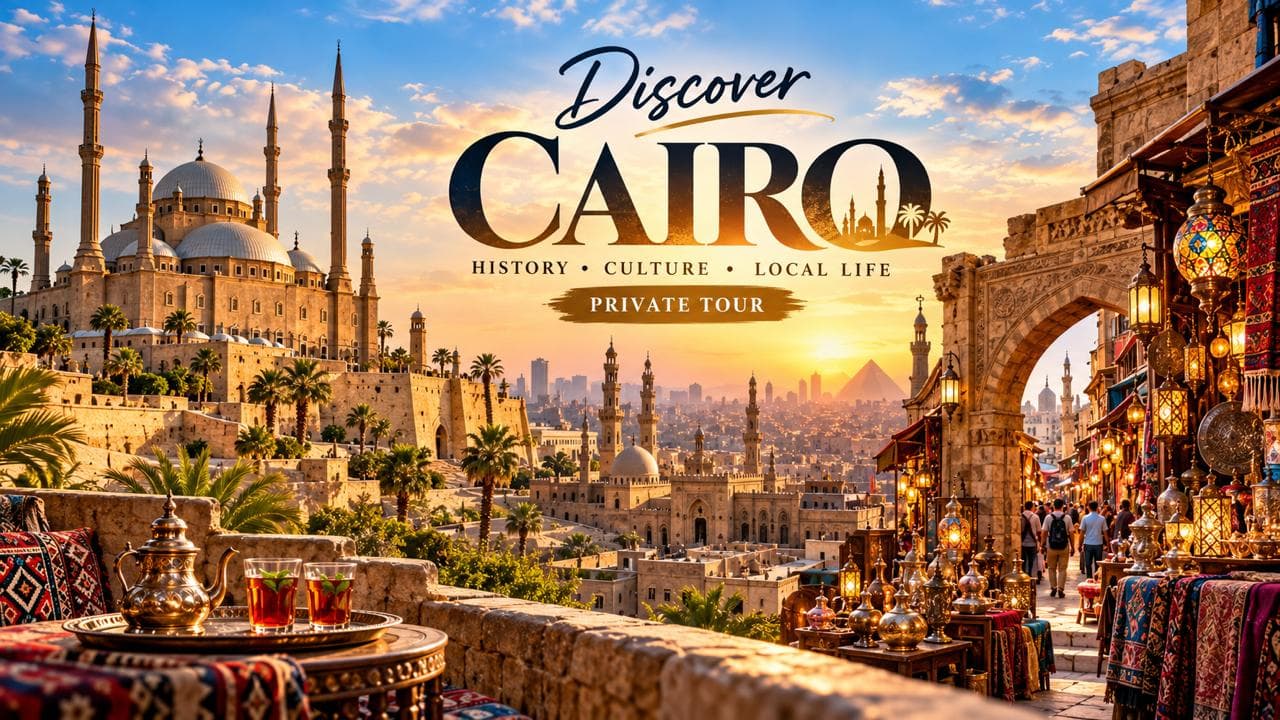
Citadel of Saladin, Islamic Cairo & Khan el-Khalili
Discover the charm of historic Cairo on a journey through the magnificent Salah El-Din Citadel, the architectural treasures of Islamic Cairo, and the vibrant traditional atmosphere of Khan El Khalili Bazaar, immersing yourself in Egypt’s rich history and cultural heritage.
From
$86.25 / per person

Giza Pyramids Family Fun Tour
A relaxed, kid-friendly journey through Giza's highlights, led by a family-savvy guide with built-in time for camel photo moments.
From
$68.75 / per person

Giza Pyramids Sunset Tour
Experience the Giza plateau at its calmest, with a private guide and a golden desert sunset behind the pyramids as the crowds fade away.
From
$81.25 / per person

Giza Pyramids ATV Desert Adventure
Race a quad bike across real desert dunes behind the Giza plateau, with the Great Pyramids rising ahead from angles few visitors ever see.
From
$50.54 / per person
Ready to Explore Cairo & Giza?
Discover the perfect mix of history, adventure and relaxation. Whether you're after ancient wonders, desert thrills or a peaceful escape, Cairo & Giza has an unforgettable trip waiting.
Weather
When is the Best Time to Visit Cairo & Giza?
The sweet spot for a Cairo trip is October-April — comfortable sightseeing temperatures without the brutal summer heat that makes walking around the Pyramids or Islamic Cairo genuinely tough.
Best for Sightseeing
October-April — comfortable walking temperatures
Best for the Pyramids at Sunrise
Year-round, but clearest skies November-February
Avoid If Heat-Sensitive
June-August — daytime highs can exceed 38°C
Best Value Period
July-August — lowest hotel rates
Winter (Dec-Feb, 18-22°C)
Mild, dry and sunny days with cool evenings around 8-10°C — the most comfortable season for full days of walking.
Top Winter Activities
- Pyramids of Giza and Sphinx, no midday heat to fight
- Grand Egyptian Museum, a full comfortable day
- Islamic Cairo and Khan el-Khalili walking tour
Winter Travel Tips
- Pack a light jacket for evenings
- Book major sites for mid-morning to avoid the coolest hour at opening
- This is peak season — book hotels and guides ahead
Spring (Mar-May, 24-32°C)
Warm and mostly dry, though occasional khamaseen sandstorms can roll through in March-April.
Top Spring Activities
- Saqqara & Dahshur pyramids day trip
- Felucca sunset sail or Nile dinner cruise
- Al-Azhar Park sunset walk
Spring Travel Tips
- Check the forecast for khamaseen sandstorm days
- Pack sunscreen and a hat for midday outdoor sites
- Check Ramadan dates in advance
Summer (Jun-Aug, 33-40°C)
Very hot and dry, with little relief even after dark — outdoor sightseeing needs to be planned carefully. Lowest hotel prices of the year.
Top Summer Activities
- Grand Egyptian Museum and Egyptian Museum, both air-conditioned
- Early-morning Pyramids visit before the heat peaks
- Evening felucca sail once the sun drops
Summer Travel Tips
- Visit outdoor sites before 9am or after 4pm
- Drink 3-4 liters of water daily
- Use SPF 50+ and a wide-brim hat at the Pyramids
- Expect the best hotel deals of the year
Fall (Sep-Nov, 25-33°C)
A second sweet spot — temperatures ease off through October and November into comfortable sightseeing range.
Top Fall Activities
- Citadel, Islamic Cairo and Khan el-Khalili
- Cairo food market walking tour
- Coptic Cairo and Egyptian Museum tour
Fall Travel Tips
- September can still run hot — plan outdoor time for morning or late afternoon
- Book hotels early — this is a high-demand season
- Bring layers as evenings cool down through November
Shopping
 📜 Egyptian papyrus
Hand-painted sheets featuring hieroglyphics or scenes from the Egyptian Museum's collection, €5-50 depending on size — Khan el-Khalili and dedicated papyrus institutes both sell it.
Buying Tips
- Genuine papyrus is flexible and doesn't crack when bent
- Look for detailed, even brushwork
- Ask for a certificate of authenticity on larger pieces
 🌶️ Spices, tea & hibiscus
Cumin, dukkah blends, saffron and vivid red hibiscus (karkade) tea fill entire stalls in the Khan el-Khalili spice market, usually €3-15.
Buying Tips
- Smell the spices to check freshness and potency
- Vacuum-sealed packs travel better than loose spices
- Prices rise for tourists by default — always bargain
 💍 Gold & silver jewelry
Khan el-Khalili's goldsmith alleys have been trading since medieval times — cartouches with your name in hieroglyphics, plus Ankh and Eye of Horus pendants, sold by weight from roughly €20 up.
Buying Tips
- Check for a quality stamp (18K, 21K or 925)
- Compare prices across several shops before buying
- Order a custom cartouche early — engraving takes a day or two
 🏺 Alabaster & stone carvings
Translucent stone scarabs, small pyramids, vases and busts of pharaohs — €10-100+, sold both in Khan el-Khalili and at shops near the Giza plateau.
Buying Tips
- Real alabaster feels cool to the touch and is slightly translucent
- Hand-carved pieces have small natural imperfections
- Plastic imitations are noticeably lighter and perfectly uniform
Travel Tips
📌 Good to Know
Getting around
Traffic is heavy and constant — the Cairo Metro is fast and cheap for cross-city trips, ride-hailing apps (Uber/Careem) are the easiest option for point-to-point, and walking works well within a single neighborhood like Zamalek or Downtown.
Connectivity
Local SIM cards are cheap and widely available at the airport and in most neighborhoods, with generally strong 4G/5G coverage across the city.
🕌 Culture & Practical
Dress modestly, especially at religious sites
Cover shoulders and knees when visiting mosques and churches; a headscarf is expected for women entering mosque prayer halls, and is usually available to borrow at the entrance.
Friday prayer timing
Some mosques close to non-Muslim visitors during Friday midday prayers — plan mosque visits for other times of day or week if possible.
Basic Arabic goes a long way
"Shukran" (thank you) and "min fadlak" (please) are appreciated everywhere, and can help when bargaining in Khan el-Khalili.
🎒 What to Pack
Comfortable walking shoes
Between the Pyramids plateau, the Egyptian Museum's halls and Khan el-Khalili's uneven alleys, you'll cover a lot of ground on foot — supportive, closed shoes matter more here than sandals.
Sun & dust protection
The Giza plateau has zero shade — sunscreen, a hat and sunglasses are essential. A light scarf also helps with dust on windier days.
Modest clothing layers
Pack a light scarf or shawl and clothing that covers shoulders/knees for mosque and church visits, even outside religious sites for general comfort.
🏥 Health & Safety
Hydration & air quality
Drink bottled water throughout the day, and know that Cairo's air quality can be poor, especially in summer — those with respiratory conditions should plan accordingly.
Street crossing
Traffic doesn't always stop at crosswalks — cross with a local or in a small group when in doubt, and stay alert even on marked pedestrian crossings.
Common scams
Around major sites, be wary of unsolicited "free" camel rides or guide offers that end with a demand for payment — agree on any price before accepting help from a stranger.
🍽️ Food & Dining
Try koshary
Egypt's national dish — rice, lentils, macaroni, chickpeas and crispy onions with a spiced tomato sauce — is cheap, filling and everywhere; a proper Cairo food experience isn't complete without it.
Drinking water
Stick to bottled or filtered water, and be cautious with ice and raw salads from street stalls if you have a sensitive stomach.
Rooftop dinner with a view
Several hotels and restaurants around Zamalek and Garden City offer Nile-view rooftop dining — a good bookend to a day of sightseeing.
✈️ Travel Logistics
Visas
Most nationalities can get a visa on arrival (around $25) or an e-visa in advance — check requirements for your passport before you travel.
Airport transfers
Pre-arrange a transfer or use a ride-hailing app rather than agreeing a fare with a driver who approaches you at arrivals.
Emergency numbers
Police 122, Ambulance 123, Tourist Police 126 — see the full Emergency section below for hospitals and more.
Airport timing
Arrive about 3 hours before an international departure — CAI is Egypt's busiest airport and security lines can be long at peak times.
Costs & Budget
How far your euros, dollars and pounds go in Cairo — realistic numbers for 2026.
Currency & payments
The local currency is the Egyptian pound (EGP). Cards are widely accepted in hotels, malls and larger restaurants, but street food, taxis and Khan el-Khalili stalls are mostly cash. ATMs are everywhere in central Cairo.
Daily budget guidelines
Budget traveller: €25-40/day (hostel/budget hotel, street food, public transport). Mid-range: €55-90/day (3-4 star hotel, mix of guided tours and taxis). Luxury: €150+/day (5-star Nile-view hotel, private guides, fine dining). Entry tickets add up fast — the Grand Egyptian Museum and Giza Pyramids each carry separate admission fees.
Tipping & baksheesh
Tipping ("baksheesh") is deeply embedded in daily life here — €1-2 for restaurant waiters, small notes for anyone who opens a door or points you somewhere at a site, and €3-5 per day for private guides or drivers. Keep small-denomination EGP notes on you at all times.
Emergency
Tourist Police: 126. Ambulance: 123. Cairo has Egypt's best-equipped hospitals, including several with international accreditation and English-speaking staff — As-Salam International Hospital and Dar Al Fouad are commonly used by tourists and expats. Keep your hotel's front desk number handy.
Essential Emergency Numbers
126
Tourist Police
123
Ambulance
122
Police
180
Fire
112
General Emergency
Save your embassy's Cairo address
As the capital, Cairo is where almost every country's embassy is based — save your embassy's exact address and phone number before you travel, not just the general country page.
Medical Facilities in Cairo & Giza
As-Salam International Hospital
+20 2 2524 0250A leading private hospital with international accreditation and English-speaking staff, commonly used by tourists.
Dar Al Fouad Hospital
+20 2 3846 5000A well-regarded private hospital in 6th of October City with a full range of specialties.
Cleopatra Hospital
+20 2 2684 0800A large private hospital in Heliopolis, popular with expats and close to the airport.
Pharmacies
Widely available24-hour pharmacies are common across central Cairo, and pharmacists can often help with minor issues directly.
Common Emergencies & Prevention
Heat-Related Issues
Stay hydrated with 2-3 liters of water daily, avoid the Giza plateau's direct sun between 11am-3pm in summer, use SPF 30+ sunscreen, and wear a hat.
Traffic Safety
Cairo's traffic is intense and crosswalks aren't always respected — cross with locals or in a group, and use ride-hailing apps rather than hailing a taxi off the street when possible.
Minor Injuries & Illnesses
For small cuts, stings or an upset stomach, pharmacies across the city can help directly, and hotel front desks can usually call an on-call doctor.
Embassy & Consular Services
Cairo is where nearly every country keeps its Egyptian embassy — if you need consular help:
- Contact your country's embassy directly (keep the number saved)
- Let your hotel know — front desks are used to helping with this
- Reach out to your tour operator if you booked through one
- Contact the Tourist Police (126), who are trained to assist foreign visitors
- UK Embassy Cairo+20 2 2791 6000
- US Embassy Cairo+20 2 2797 3300
- EU Citizens Emergency+20 2 2461 9860
Essential Safety Tips
- Keep a physical photocopy of your passport separate from the original
- Make sure your travel insurance covers medical treatment and theft
- Save emergency numbers and your hotel's address in your phone
- Agree on prices before accepting any unsolicited help near tourist sites
- Use ride-hailing apps or pre-arranged transfers rather than street-hailed taxis at night
- Cross busy streets with locals or in a group
- Bring extra cash — many small vendors and taxis are cash-only
- Learn a few basic emergency phrases in Arabic (see the phrases below)
Emergency Arabic Phrases
مساعدة
Musa'ada
Help!
طبيب
Tabeeb
Doctor
مستشفى
Mustashfa
Hospital
شرطة
Shurta
Police
أنا تهت
Ana toht
I am lost
اتصل بالإسعاف
Itasel bil is'aaf
Call an ambulance
Travel Insurance
Comprehensive travel insurance is worth having for a Cairo trip — city crowds, uneven pavements at historic sites, and heavy traffic all add up. Make sure your policy includes:
- Medical treatment (minimum €50,000 coverage)
- Emergency evacuation and repatriation
- Theft and loss of belongings
- Personal liability
- Trip cancellation and interruption
Important Disclaimer
This information is a general guide and may change. Verify details with your accommodation on arrival in Cairo & Giza — in an emergency, hotel staff are usually the fastest way to get help.